


Have you ever stood in a place and felt the past breathe? It’s a quiet hum beneath the surface of the present, a whisper from generations who walked the same earth. We have felt this profound connection in the sacred spaces that guard our nation’s soul.
These are not mere buildings filled with objects. They are vibrant portals where history lives and breathes. Using living history methods, our guardians revive tribal life, allowing you to step into the stories themselves.
In the bustling heart of Dar Salaam, the National Museum stands as a proud testament to this legacy. It is the largest and most famous institution of its kind, a beacon of knowledge. Yet, from busy city centers to remote villages, each space offers a unique window into the diverse cultures that shape our land.
UMCTOtz has seen travelers arrive with curiosity and depart with a transformed spirit, having touched the essence of humanity’s cradle. From ancient hominid footprints to the declarations of nationhood, these narratives illuminate our shared heritage.
As local hosts and guardians, we invite you to walk these halls with reverence. Let us help you craft a personalized experience that resonates deeply. Reach out at +255 762 988 420 or info@umctotz.org. Discover how a journey through memory can become a journey into your own soul.
Key Takeaways
- Cultural institutions offer a profound, emotional connection to Tanzania’s heritage.
- Many sites use “living history” techniques to create immersive, authentic experiences.
- The National Museum in Dar Salaam is the country’s largest and most prominent museum.
- These spaces preserve stories from ancient humanity to modern nation-building.
- A visit can be a transformative experience, offering more than just information.
- Expert local guides can create personalized tours for a deeper connection.
- These halls act as bridges connecting ancient wisdom with the modern world.
An Overview of Tanzania’s Museum Landscape
Across this nation, cultural institutions serve as bridges connecting ancient wisdom with contemporary understanding. They form a network as diverse as the people themselves.
The Cultural Tapestry of Tanzania
UMCTOtz stands as guardians of a museum landscape reflecting the rich mosaic of various ethnic groups that shape our identity. Each institution offers a unique perspective on East African heritage.
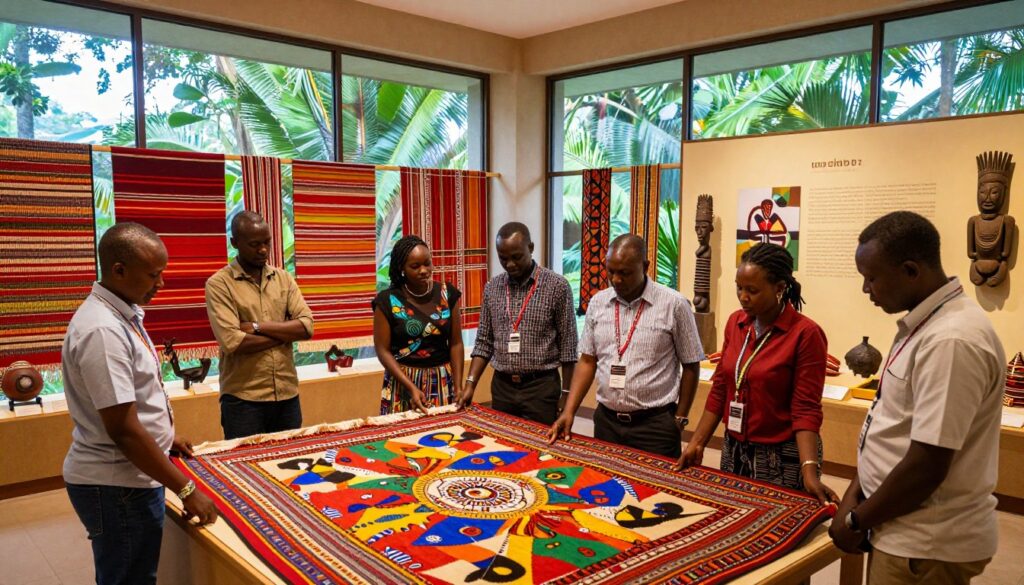
From formal urban centers to living villages, these spaces capture the essence of our collective journey. They preserve stories spanning millennia while embracing modern creativity.
Historical and Modern Perspectives
These institutions document the complex interplay between tradition and innovation. They reveal how indigenous cultures have evolved while maintaining core values.
As one elder shared with us:
“A museum is not just a building it is the heartbeat of our people, connecting what was with what will be.”
The following table illustrates the diversity within our museum network:
| Museum Type | Focus Area | Experience Offered | Regional Representation |
|---|---|---|---|
| Urban Institutions | National history tanzania | Formal exhibitions | Coastal & Highland |
| Living Villages | Ethnic traditions | Interactive demonstrations | Lake regions & Plains |
| Specialized Centers | Art & Archaeology | Educational programs | Throughout East African |
This rich tapestry allows visitors to engage with the full spectrum of our heritage. Each museum contributes uniquely to understanding the history tanzania and its place in the broader East African context.
Exploring Museums in Tanzania
What if a journey could rearrange the architecture of your soul?UMCTOtz have carefully chosen these places to visit not for popularity but for their transformative power. They awaken wonder in open-hearted travelers.
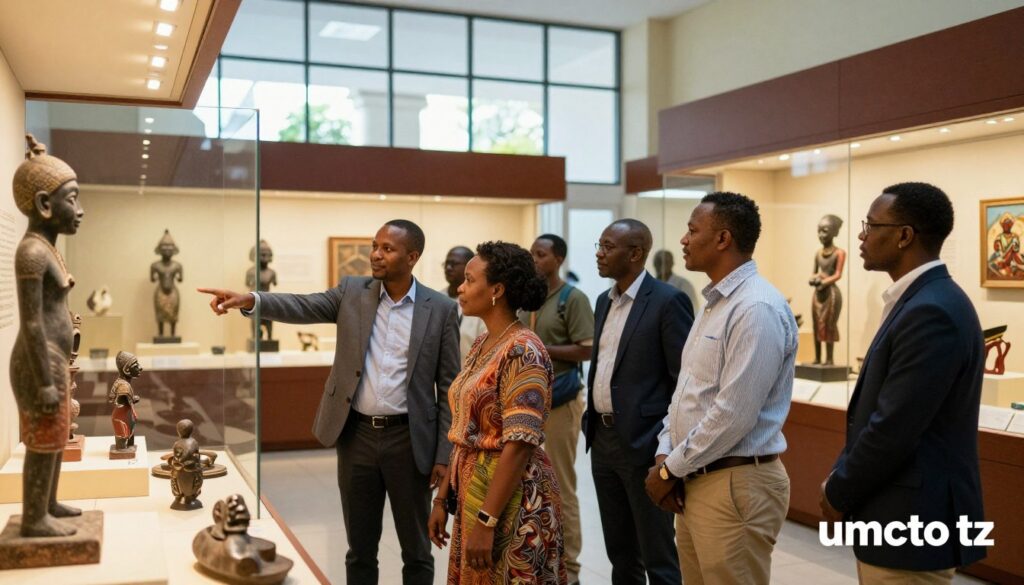
Each museum offers a unique gift. Some reveal scholarly insights into human evolution. Others immerse you in living traditions. Many chronicle the political awakening that shaped this nation.
Why These Museums Are a Must-Visit
The true attraction lies in authentic connection. These institutions refuse to simplify complex narratives. They honor the land and people with integrity.
As one elder shared with us:
“Enter these halls not as a spectator, but as a participant in the great human story.”
Modern travelers seek meaningful engagement over sightseeing. These curated spaces deliver experiences that resonate long after departure. They shift perspectives and deepen appreciation.
Each museum offers its own rhythm. You might explore fossil exhibits in quiet contemplation. Or join energetic dance performances under equatorial skies.
| Experience Type | Learning Focus | Visitor Engagement | Transformative Impact |
|---|---|---|---|
| Scholarly Exploration | Human origins & evolution | Individual reflection | Intellectual awakening |
| Cultural Immersion | Living traditions | Interactive participation | Emotional connection |
| Historical Journey | Nation-building stories | Guided discovery | Perspective shifting |
We invite you to approach these sacred spaces with curiosity. Discover unexpected connections between heritage and your own life journey. These are essential places to visit for any thoughtful traveler.
The National Museum and House of Culture
Imagine standing where ancient footsteps meet modern creativity in a single, harmonious space. Our premier national museum house on Shaaban Robert Street in dar salaam embodies this beautiful convergence. It stands as a testament to layered heritage.
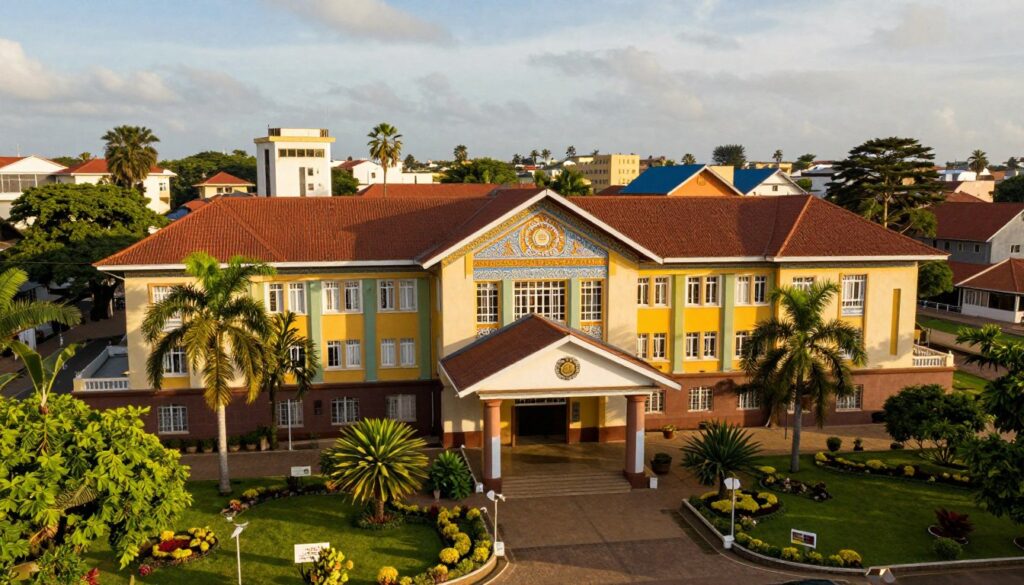
This institution’s museum houses treasures spanning humanity’s entire journey. From our earliest ancestors to contemporary visionaries, each artifact tells part of our story.
Fossil Discoveries and Colonial Artifacts
The collection includes the renowned Zinjanthropus fossil, a copy of the “nutcracker man” from Olduvai Gorge. This ancient skull reminds us that this land witnessed humanity’s dawn.
Walking through the History Room reveals geological strata of memory. We encounter the sophisticated Shirazi civilization, the trauma of the coastal slave trade, and colonial resilience.
“Each artifact carries stories of struggle, adaptation, and survival that inform our present moment.”
We treasure the vintage automobile collection, particularly the Rolls-Royce that symbolizes transformation. It served British administrators before carrying President Nyerere as a free nation’s leader.
Contemporary Art and Renovated Spaces
The newly renovated house culture extension represents our commitment to honoring tradition while embracing innovation. It provides spaces where modern creators engage with ancestral themes.
This museum houses a culture that blends educational resources with concert venues. It displays vibrant contemporary art that speaks to today’s Tanzania while respecting yesterday’s wisdom.
| Experience | Historical Era | Key Artifacts | Emotional Impact |
|---|---|---|---|
| Ancient Origins | Prehistoric | Zinjanthropus fossil | Awe at human beginnings |
| Colonial Legacy | 19th-20th Century | Vintage automobiles | Reflection on transformation |
| Modern Creativity | Contemporary | Art exhibitions | Inspiration for future |
The national museum on Robert Street offers more than exhibits. It provides an essential foundation for understanding our position at a cultural crossroads. This national museum house serves as portal connecting eras.
Village Museum: Experiencing Open-Air Culture
Where the sky becomes the ceiling and the earth the floor, history unfolds in real time. This remarkable village museum transforms cultural preservation into living participation.
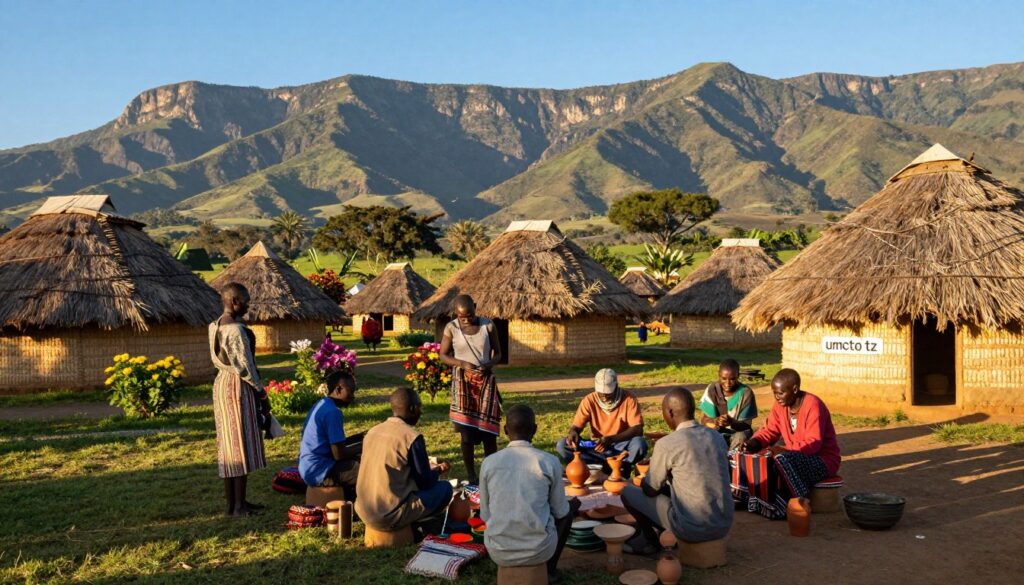
Located on Makaburi Street just beyond Dar Salaam‘s urban rhythm, the space invites deep engagement. Daily opening hours from 9:30 AM to 6:00 PM allow sunlight to dance across traditional structures.
Traditional Architecture and Craft Demonstrations
Nineteen authentically reconstructed buildings stand as testaments to diverse ethnic groups. Each structure reveals unique adaptations to climate and community needs.
The village museum offers more than static displays. Artisans demonstrate hand-weaving and carving with generations of wisdom in their movements. Their skilled hands transform raw materials into functional beauty.
This unique museum offers a connection to agricultural foundations still vital today. Visitors witness traditional farming practices that sustain rural communities across the land.
As evening approaches, drum rhythms announce dance performances. Movement becomes living prayer, entertainment merging with cultural continuity. The village museum offers this celebration daily.
Each contribution from various ethnic groups creates a collective portrait of respectful coexistence. The village museum becomes a sanctuary where past and present breathe together.
The Arusha Declaration Museum: A Political Journey
What if you could stand where a nation’s moral compass was set? This modest building near Uhuru Roundabout holds the revolutionary spirit that defined our post-independence path.
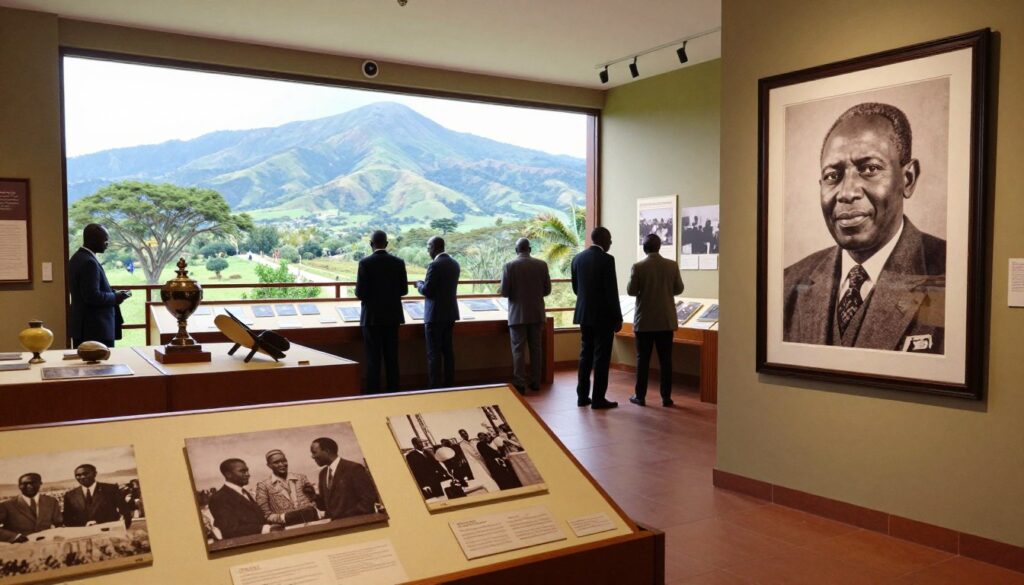
Julius Nyerere and Tanzania’s Socialist History
Within these walls in 1967, Julius Nyerere articulated ujamaa familyhood. His vision rejected colonial dependency and Cold War allegiances alike.
The Arusha Declaration championed economic self-reliance and collective welfare. Nyerere’s personal simplicity embodied the principles he advocated for all citizens.
“True independence requires more than political freedom it demands economic dignity and shared prosperity.”
This museum preserves original documents and photographs that capture this pivotal moment. Visitors witness the intellectual courage that shaped African political thought.
Visitor Tips and Accessibility
The museum welcomes guests Monday through Saturday. Opening hours run from 9:00 AM to 5:00 PM, with guided tours available.
Located in the Kaloleni area of the city, the space is wheelchair accessible. Knowledgeable staff provides context about the Arusha Declaration‘s enduring legacy.
| Visitor Information | Details | Experience |
|---|---|---|
| Operating Days | Monday-Saturday | Guided tours available |
| Entry Fee | ~10,000 TZS ($4-5) | Educational videos |
| Accessibility | Wheelchair friendly | Souvenir shop on site |
The modest entry fee reflects the institution’s commitment to making this history accessible to all. This museum offers profound insight into nation-building complexities.
Arusha Cultural Heritage Centre: A Visual Feast
Some spaces speak in colors and forms rather than words, whispering ancestral wisdom through every brushstroke. The Arusha Cultural Heritage Centre embodies this silent dialogue, positioned strategically between the bustling city center and the gateway to northern parks.
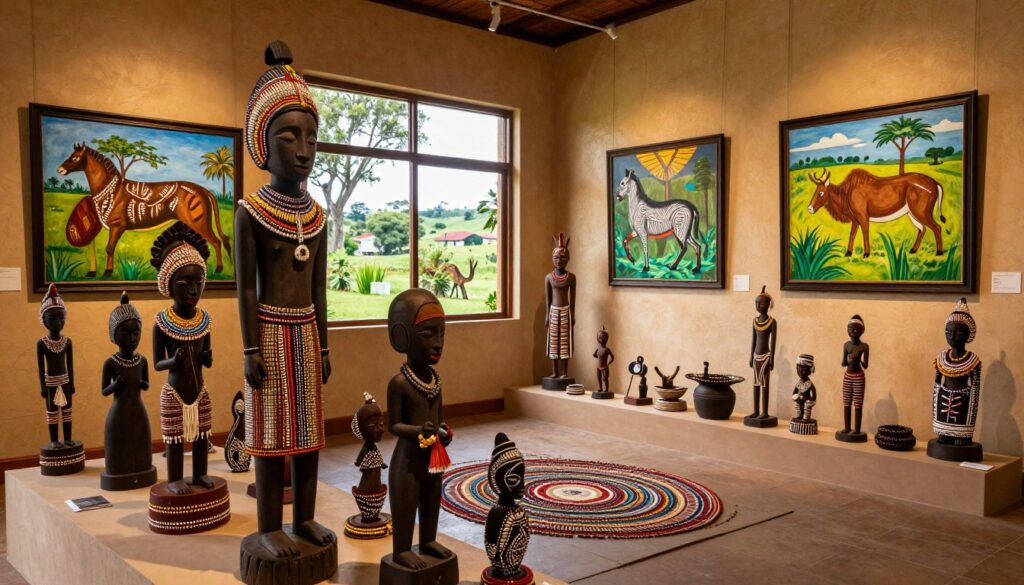
Generous opening hours from 9:00 AM to 6:00 PM allow visitors to wander through light-filled galleries at their own pace. This museum features a remarkable fusion of architectural elements that honor both tradition and innovation.
Exhibitions of Contemporary and Traditional Art
The Centre’s collection spans generations of creative expression. Ancient tribal masks stand in conversation with bold contemporary paintings, each piece telling part of our shared story.
Visitors enjoy discovering how utilitarian objects become art through masterful craftsmanship. Intricate Maasai beadwork, hand-carved sculptures, and woven textiles reveal hours of skilled labor and cultural understanding.
Every artifact represents more than aesthetic beauty; it carries the spirit of communities across centuries. The museum becomes a living gallery where past and present creators meet.
Guided Tours and Cultural Workshops
We encourage participation in guided tours led by cultural interpreters who illuminate the stories behind each artwork. They explain how specific patterns carry meaning and how techniques connect to environmental resources.
The experience extends beyond observation through hands-on workshops. Guests learn basic beading or carving principles, experiencing firsthand the patience these art forms demand.
After cultural immersion, the on-site café provides space for reflection. Natural light and landscaped grounds create an atmosphere where appreciation extends beyond gallery walls into lived experience.
Old Boma Museum: Colonial Legacy and Natural History
Sometimes the most profound stories are told not in artifacts but in the very stones that witnessed history unfold. The Old Boma Museum stands as such a testament, its fortress architecture speaking volumes about the complex colonial history that shaped this region.
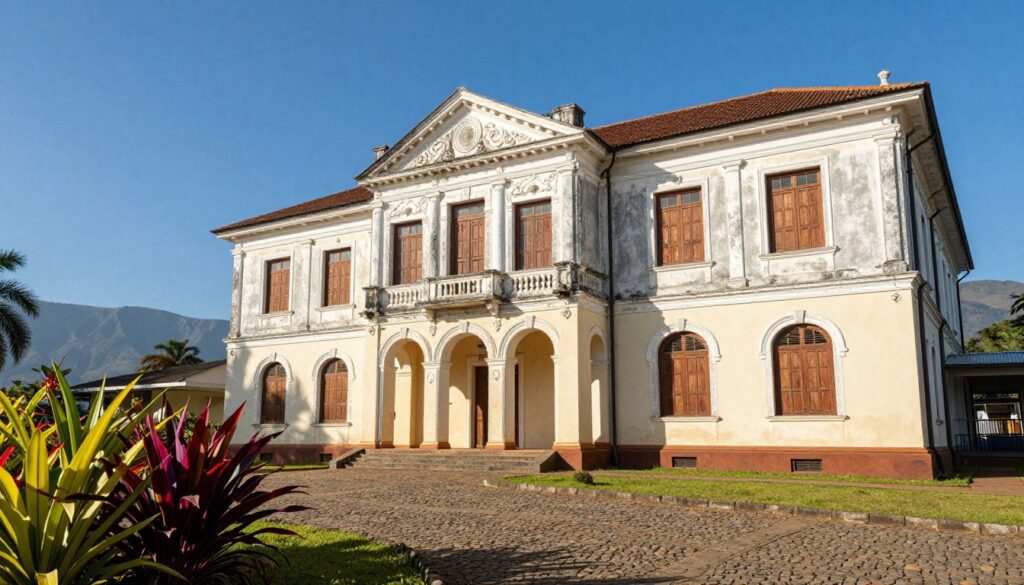
The strategic museum location on Boma Road places visitors within walls built between 1899 and 1900. This structure originally served as a German military base before transitioning to British colonial administration after World War I.
Historical Artifacts from the German and British Eras
Walking these historic grounds, we confront the layered legacy of German-British colonial presence. The solid construction reflects ambitions for permanent control, yet also catalyzed unity among previously separate communities.
The museum houses three buildings with diverse collections. Natural history exhibits focus on human evolution, featuring remarkable fossil discoveries from Olduvai Gorge. The prized display showcases the Laetoli Footprints, 3.6 million-year-old hominid impressions proving early upright walking.
Generous opening hours from 9:00 AM to 6:00 PM (Sunday until 5:00 PM) allow deep exploration. The surrounding botanical garden offers a reflection space where indigenous and introduced species coexist, mirroring cultural blending.
We encourage visitors to engage with this colonial history through a nuanced understanding. The museum reveals how past struggles inform present consciousness and ongoing sovereignty work.
Olpopongi Maasai Cultural Village & Museum
What if you could step into a living tapestry woven from centuries of pastoral wisdom? We guide travelers beyond conventional boundaries to where culture pulses with elemental vitality.
The journey itself becomes part of the transformation. From Arusha, the 85-kilometer route leads through increasingly remote terrain. Each kilometer creates distance from modern conveniences.
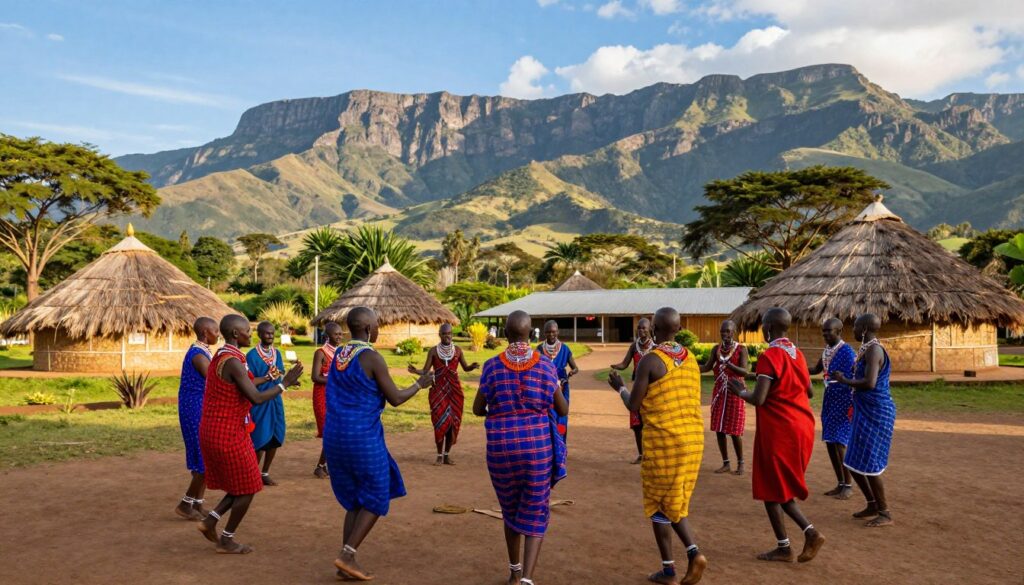
Immersive Experiences in Maasai Traditions
This remarkable museum location occupies the semi-arid area between sacred mountains. The setting reflects generations of adaptation to challenging environments.
Daily life here continues not as performance but as living reality. Elders share oral histories while women craft beadwork encoding social meanings.
We witness visitors arriving with romantic notions about pastoral life. They depart with profound respect for the knowledge required to thrive here.
The museum offers multiple engagement levels. Choose brief day visits or overnight stays, sleeping in traditional bomas.
This experience presents an alternative philosophy from one of east african‘s most iconic communities. Wealth is measured in relationships rather than material accumulation.
Every aspect of this living museum challenges Western assumptions. Here, culture is actively practiced rather than archived behind glass.
The museum becomes a sanctuary where individual identity merges with community belonging. Connection to land and livestock supersedes all other concerns.
National Museum of Dar es Salaam: A Historic Landmark
Walls that once echoed colonial proclamations now resonate with the vibrant chorus of a sovereign nation’s identity. This national museum house stands as a living chronicle of transformation.
We witness how architecture embodies political evolution. The journey from King George V Museum to today’s national museum reflects our collective reclamation.
From King George V Museum to Modern Exhibits
Founded in 1940 under imperial patronage, this institution has undergone a profound metamorphosis. Each renovation represents another step toward cultural sovereignty.
The collection spans a remarkable breadth. From Leakey expedition fossils to contemporary artistic expressions, it captures our entire human journey.
This museum courageously presents difficult histories. Exhibits on slavery and colonialism honor truth without sanitization.
The house culture addition provides space for modern creators. It bridges ancestral wisdom with contemporary vision.
| Era | Institution Name | Primary Focus | Cultural Significance |
|---|---|---|---|
| 1940-1960s | King George V Museum | Colonial history | Imperial narrative |
| 1960s-2000s | National Museum | Independence story | Sovereign identity |
| 2000s-Present | National Museum & House of Culture | Holistic heritage | Cultural renaissance |
Walking through this museum in Dar Salaam, visitors experience layered time. Each artifact contributes to understanding our complex tapestry.
The city‘s largest cultural institution continues evolving. It remains essential for comprehending our position at civilization’s crossroads.
Massai Cultural Museum: A Living Tradition
How does wisdom sound when spoken by the warrior who lives it? At the Massai Cultural Museum, education becomes a personal narrative. Your guide embodies the traditions they describe.
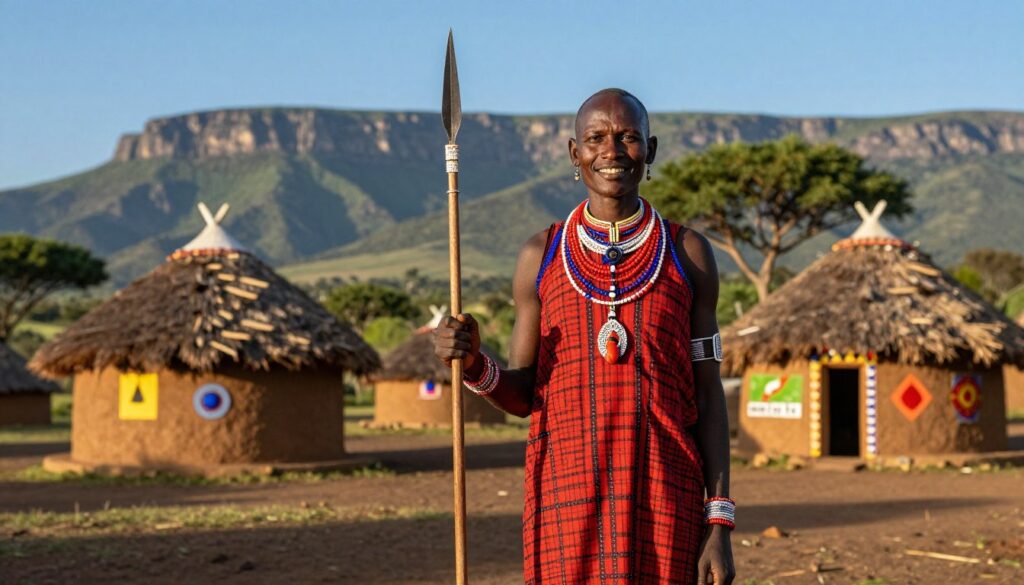
The museum location at Meserani Snake Park creates powerful synergy. This unique area connects human and reptilian communities. Both have adapted to shared environmental challenges for millennia.
Cultural Tours with a Maasai Warrior
Visitors enjoy the rare privilege of learning directly from practitioners. Maasai guides share lived experience rather than textbook knowledge. Their explanations bloom with personal stories and family histories.
The intimate scale of this museum creates space for genuine dialogue. You can ask questions and challenge assumptions. Cultural exchange transcends typical tourist transactions here.
Dioramas come alive through atmospheric chants and songs. This multisensory immersion communicates aspects of Maasai life that visual displays cannot convey alone. Background noises transform static scenes into living moments.
We deeply appreciate how proceeds support a free local medical clinic. This museum model demonstrates how cultural tourism can generate tangible community benefits. It represents an alternative to large institutional approaches.
Through warrior guides, you gain insight into rigorous coming-of-age processes. You learn about complex social hierarchies and spiritual beliefs. This small community-operated museum prioritizes authentic connection over comprehensive collection.
Arusha Museum of Natural History: Evolution of Humanity
Within fortress walls that once guarded colonial power, humanity’s deepest origins now reveal themselves in quiet dignity. The Arusha Museum of Natural History occupies the former German Boma on Boma Road, where military control has yielded to scientific enlightenment.
This remarkable institution opened its doors in 1934, transforming a symbol of dominance into a sanctuary of knowledge. The museum houses three distinct buildings, each contributing to a comprehensive narrative of our shared journey.
Fossil Exhibits and Archaeological Highlights
The collection emphasizes discoveries from Olduvai Gorge, positioning this land at humanity’s very cradle. We witness how our ancestors gradually developed the characteristics we recognize as distinctly human.
The museum’s most prized display features the Laetoli Footprints discovered in 1978. These 3.6 million-year-old impressions create an almost spiritual connection across incomprehensible time.
Beyond paleontology, the museum houses fascinating exhibits of regional plants and insects. These document the biodiversity that has sustained human populations throughout our long tenure.
Generous opening hours make this museum an essential stop for travelers heading to northern safari circuits. It provides crucial context for understanding the deep time underlying the landscapes they will traverse.
We appreciate how the institution interweaves natural history with political history. This acknowledges that human evolution continues through cultural development and the ongoing journey toward justice.
Olduvai Gorge Museum: Tracing Human Origins
In the dust of a sun-scorched gorge lies the key to humanity’s dawn. We guide you to where Earth reveals its deepest secrets. The Olduvai Gorge cuts through geological time, exposing layers where our ancestors’ stories await discovery.
This remarkable museum stands as a testament to Mary Leakey’s visionary work. Founded in the late 1970s, the institution gained international recognition through J. Paul Getty Museum support. A new wing added last century expanded its capacity to share our collective heritage.
Paleontological Artifacts and Early Hominid Discoveries
The museum houses an extraordinary collection of fossils and tools. Each artifact represents millennia of human evolution. Visitors witness the gradual emergence of cognitive abilities we consider uniquely human.
Stone tools show increasing sophistication across generations. They document the evolution of intelligence and cultural transmission. This museum reveals nearly two million years of continuous hominid presence.
The Laetoli Footprints and Their Significance
We stand in awe before evidence of early upright walking. The Laetoli Footprints create a visceral connection across unimaginable time. They prove our ancestors walked this land 3.6 million years ago.
Visiting this museum at the actual gorge site creates a powerful kinship. You stand where early hominids once stood, seeing the horizons they saw. This experience transforms abstract knowledge into a tangible connection.
Mwalimu Nyerere Museum: Celebrating a Nation’s Legacy
In the village that cradled a nation’s conscience, personal artifacts whisper stories of transformative leadership and moral courage. Butiama’s humble soil nurtured Julius Nyerere in 1922, long before he would guide this land to sovereignty.
Personal Artifacts and Struggles for Independence
This remarkable museum opened its doors in 1999, inviting pilgrims to connect with the father of the nation. Generous opening hours from 9:30 AM to 6:00 PM allow ample time for contemplation.
The museum houses intimate items from Nyerere’s life that humanize the statesman. Visitors encounter his daily routines, family bonds, and personal doubts alongside political triumphs.
On display are powerful documents from the independence struggle. These artifacts capture the strategic thinking required for a peaceful transition from colonial rule.
We treasure gifts from world leaders and common citizens alike. Each token demonstrates Nyerere’s continental influence and the respect he commanded globally.
| Visitor Experience | Historical Focus | Emotional Impact | Philosophical Legacy |
|---|---|---|---|
| Personal artifacts | Independence journey | Human connection | Ujamaa philosophy |
| Document exhibits | Nation-building | Reverent contemplation | Moral leadership |
| International gifts | Global influence | Inspired reflection | African unity |
This sacred space preserves not just objects but the enduring spirit of familyhood that challenged global materialism. The museum offers urgent lessons in leadership that prioritizes dialogue over domination.
Sukuma Tribe Cultural Heritage: A Living Museum
Sometimes the most profound cultural preservation begins with an outsider’s reverence for indigenous wisdom. We journey to the shores of Lake Victoria, where Father David Clement recognized the irreplaceable value of Sukuma traditions during modernization.
The museum location at Bujora Paris, near Mwanza places visitors in the heartland of Tanzania’s largest ethnic group. Founded in the late 1960s, this living institution receives around 2,000 visitors annually, allowing intimate engagement with authentic cultural experiences.
Traditional Buildings and Ethnic Exhibits
Traditional Sukuma buildings dot the grounds, each structure representing sophisticated architectural knowledge. The royal pavilion stands as a testament to complex political structures based on spiritual authority rather than military conquest.
Visitors enjoy exploring exhibits of material culture that accompany every significant life event. Drums, costumes, furniture, and weapons demonstrate the woodworking mastery and symbolic decorations that defined Sukuma life.
We honor David Clement‘s legacy, recognizing how his intercultural sensitivity enabled collaboration with community elders. This space allows ethnic groups to maintain distinct identities while participating in broader national consciousness.
| Cultural Element | Significance | Visitor Experience | Preservation Impact |
|---|---|---|---|
| Royal Pavilion | Spiritual authority center | Understanding hierarchy | Political structure memory |
| Dance Pavilion | Community celebration space | Rhythmic immersion | Ceremonial continuity |
| Material Exhibits | Daily life artifacts | Tangible connection | Craftsmanship preservation |
The grounds move at traditional rhythms rather than tourist pace. This creates authentic cultural experiences that honor Father David‘s vision. For deeper immersion, consider a personalized cultural tour that respects these living traditions.
Arusha Tanzanite Museum and Sultan Palace: Gems and Royal Legacy
What if Earth’s hidden treasures could whisper stories of geological destiny and royal ambition in the same breath? We present two contrasting yet complementary attractions that reveal different facets of our nation’s riches.
The Tanzanite Exhibit and Its Global Appeal
The Arusha Tanzanite Museum celebrates a geological marvel found nowhere else. This blue-violet mineral emerged from Mererani Hills in the late 1960s, now valued beyond gold.
Every day, visitors discover how volcanic forces created this unique gem. The museum features educational presentations about mining techniques and cutting processes.
Witness the transformation from rough stone to brilliant jewel. This journey mirrors our own national evolution from humble beginnings to radiant presence.
Zanzibar’s Sultan Palace: Royal History and Oceanfront Splendor
We journey to Stone Town, where the Sultan Palace stands as an architectural testament to 19th-century Omani rule. Its white-walled grandeur faces the ocean between the House of Wonders and the Old Dispensary.
This museum preserves royal life from a bygone era. Ornate banquet tables, formal portraits, and ceremonial thrones reveal the luxury of coastal trade dominance.
The palace’s partial destruction in 1896 reminds us that power shifts like tides. Yet Stone Town’s cultural fusion endures through careful preservation.
For those seeking to extend their cultural journey beyond mainland institutions, we arrange comprehensive experiences connecting diverse heritage sites. Contact us at +255 762 988 420 or info@umctotz.org.
Conclusion
Some journeys change your itinerary, and then some journeys change your soul’s coordinates entirely. We have walked together through a landscape where every museum becomes a portal to understanding.
The rich history tanzania reveals itself across this diverse area, from bustling city centers to remote cultural preserves. Each institution’s museum offers unique insights into our layered heritage.
Every day, we witness travelers transformed by these encounters. The experience extends beyond exhibits into a genuine connection with living traditions.
We invite you to embark on this transformative journey. For personalized itineraries connecting cultural treasures with safari adventures, reach our team at +255 762 988 420 or info@umctotz.org. Let us craft experiences honoring both your curiosity and our heritage.